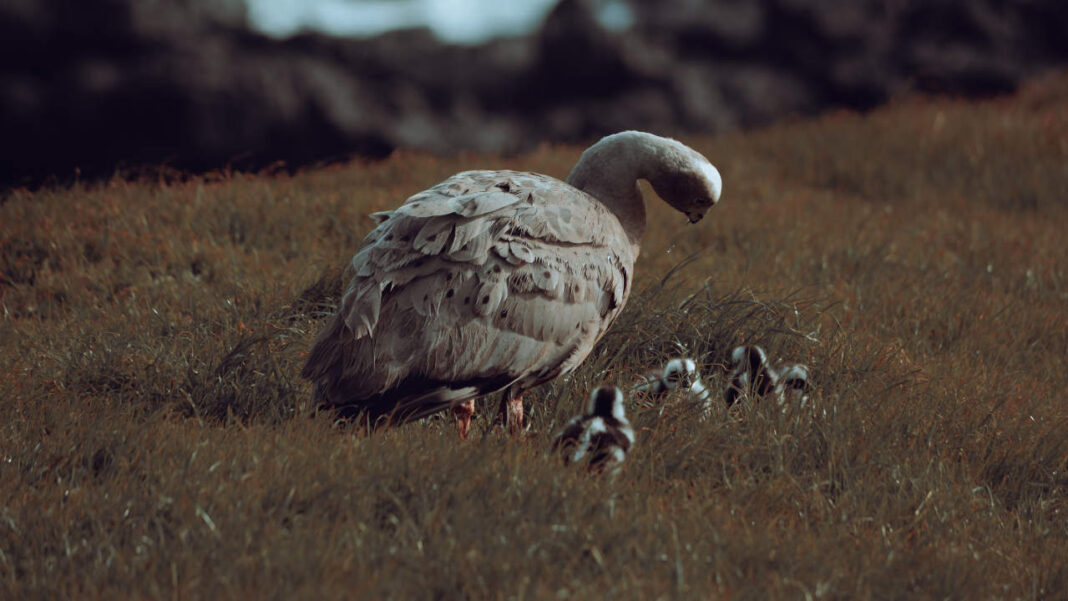

Baby giant petrels are eating plastic without even knowing it. And new research shows that even tiny amounts can affect how their bodies work while they’re still growing.
The study comes from the University of California, Davis, and Argentina’s CONICET research council. It focused on southern giant petrels, large seabirds that live across a giant range from Antarctica to Chile, Argentina, Africa, and Australia.
These birds are not endangered. But scientists see them as useful indicators. Because they feed at the ocean’s surface, they often swallow floating plastic along with their food. Parents then pass that plastic to their chicks when they regurgitate meals to feed them.
Plastic Is Everywhere in Their Diet
Researchers examined chicks in Patagonia, Argentina, during 2022 and 2023. They looked at two different growth stages. Plastic showed up in more than 71% of the chicks tested. That means most chicks are being fed plastic without their parents realizing it.
The plastic pieces were small. Compared to the size of the chicks, the amount was tiny. But even those small traces were linked to changes in the birds’ health.
Marcela Uhart, a wildlife veterinarian at UC Davis and the study’s corresponding author, said the findings were unexpected. She explained that it doesn’t take a stomach full of plastic to leave a biological signal.
Young Chicks Were Affected Most
The strongest effects showed up in chicks around one month old. Researchers found changes linked to nutrition, body condition, and metabolism. They also saw effects on liver and muscle function, along with the immune system.
Luciana Gallo of CONICET, the study’s lead author, said the surprise wasn’t just how many chicks had plastic inside them. It was how small the amounts were and how clearly they still showed up in health measurements. She noted that simply counting pieces of plastic only tells part of the story.
Do Chicks Recover as They Grow?
By the time chicks were close to leaving the nest, around three months old, most of these health changes had faded or disappeared.
Researchers aren’t sure why. It could mean chicks recover as they mature. Or it could mean plastic exposure and the body’s response happen on a different schedule. Currently, that question remains unanswered.
One measurement did stay elevated, though. It was glutathione S-transferase, or GST. This enzyme helps cells break down harmful substances and fight oxidative stress. Its presence suggests some effects may last longer than others.
Why This Discovery Matters for Conservation
Uhart said these small physiological shifts could serve as an early warning sign. They may appear well before visible illness, population decline, or death.
Giant petrels live a long time. They also reproduce slowly. And they already face other threats out at sea. Because of this, even minor effects on chick growth or survival could add up over time, potentially shaping how well future generations do.
Part of a Larger Research Effort
This project is one piece of a bigger effort to understand how plastic pollution affects seabirds, including their health, survival, and ability to reproduce. It also builds on earlier work by the same team, which looked at how marine animals are exposed to plasticisers, chemicals used to make plastic more flexible.
Additional researchers on the study include Flavio Quintana of the Institute of Biology of Marine Organisms and Andrés Attademo of the National University of the Litoral-CONICET.
Funding came from the Agreement on the Conservation of Albatrosses and Petrels, along with the Wild Animal Health Fund, a program run by the American Association of Zoo Veterinarians. The study appears in the journal Ecotoxicology and Environmental Safety.