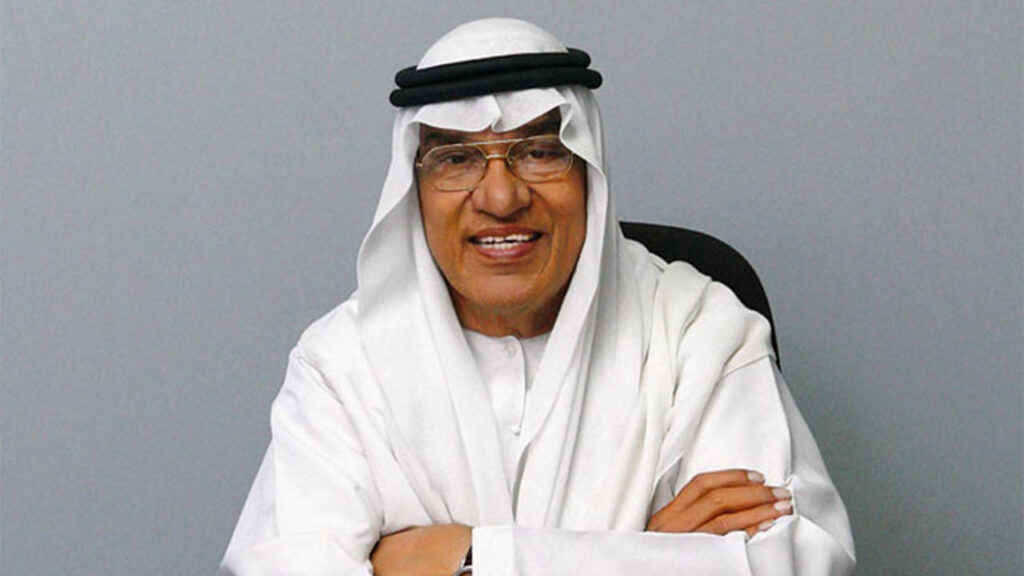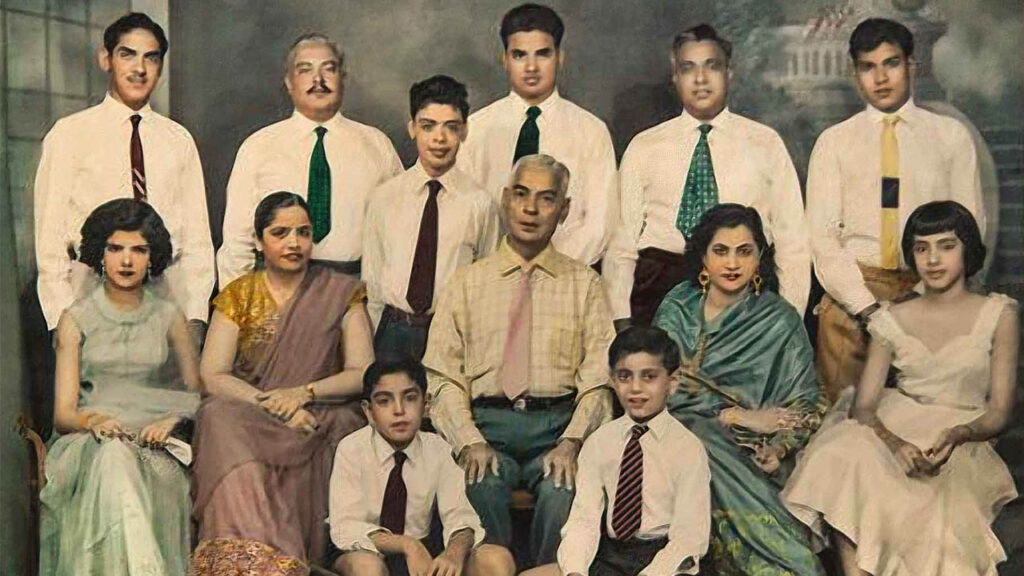

Dubai (Commonwealth Union)_ The Jashanmal Group, a glorious name in the retail and wholesale distribution sector of the Middle East, traces its origins back to 1919 when Rao Sahib Jashanmal, a visionary entrepreneur of Indian origin, established the first store in Basra, Iraq. What began as a modest retail outlet catering to diverse consumer needs swiftly burgeoned into a sprawling empire spanning the Gulf region, indicative of a great business sense and unwavering familial stewardship. Founded against the backdrop of British colonial influence in Iraq, the Jashanmal Group gained early momentum by serving British officials, expatriates, and local residents alike with a pioneering retail concept.
Over the decades, under the leadership of Rao Sahib Jashanmal and subsequently his sons Naraindas, Atma, Hiro, and Mohan, the business expanded across the Gulf, mirroring the region’s economic evolution fueled by the discovery of oil reserves. Today, the Jashanmal Group stands as a pillar of the Middle Eastern retail landscape, boasting a network of over 150 stores as of 2021. From its headquarters in Dubai, the business maintains a robust presence with offices strategically located in Abu Dhabi, Kuwait, Bahrain, Oman, Qatar, and India. Emblematic of its century-long journey, the enterprise continues to blend familial heritage with professional management, overseen by the third and fourth generations of the Jashanmal family.
Rao Sahib Jashanmal, born in 1895 in Karachi, predicted an unprecedented opportunity amidst the geopolitical shifts of the early 20th century. Inspired by the decline of the Ottoman Empire and British oversight in Iraq, he ventured to Basra, where he and his brother pioneered a retail model that revolutionized local commerce. Their inaugural store, Jashanmal Brothers, set new standards in service and product offerings, becoming a cornerstone of Basra’s burgeoning commercial scene. Encouraged by the reputation of their Basra establishment, the Jashanmal brothers followed influential figures like Colonel Harold Dickson to expand further. This led to their entry into Kuwait in 1934, followed by subsequent ventures into Bahrain, Dubai, and Abu Dhabi. Accordingly, each new locale presented unique challenges and opportunities, which the family met with characteristic adaptability and entrepreneurial passion.
The 1950s marked a pivotal juncture with the endorsement of His Highness Sheikh Rashid Al Maktoum, who recognized the transformative potential of modern retail in Dubai. This endorsement propelled the Jashanmal Group to establish a lasting presence in Dubai and beyond, solidifying its reputation as a provider of quality goods and services. Integral to the Jashanmal Group’s enduring success has been the steadfast commitment of successive generations of the family. From Rao Sahib Jashanmal’s initial foray into Basra to the present day, each era has been characterized by familial unity and a shared dedication to ethical business practices. This legacy is sustained by the current custodians of the business, who uphold values of cultural inclusivity, integrity, and community engagement.
As the Jashanmal Group celebrates a century of innovation and resilience, it remains a testament to the enduring spirit of its founder and the enduring legacy of an Indian-origin family making its mark in the heart of the Middle East’s retail sector. Furthermore, the journey of the Jashanmal Group serves as a testament to the transformative power of entrepreneurial vision and familial stewardship, underscoring the lasting imprint of an Indian-origin businessman on the Middle East’s commercial landscape.
The Commonwealth of Nations stands at a critical juncture. As the 56-member association navigates an era of fragmenting multilateralism, shifting economic gravity, and existential climate threats, the role of its Secretary-General has never been more consequential. On 1 April 2025, Shirley Ayorkor Botchewey of Ghana assumed the mantle of the Commonwealth's seventh Secretary-General, succeeding Patricia Scotland, who had served since 1 April 2016. With Botchewey now marking her first year in office and Scotland's tenure recently concluded, the moment invites a rigorous comparison: how does Botchewey's inaugural year measure against Scotland's, and what does this reveal about the evolving priorities of the Commonwealth itself?
The Scotland Era: Reform from Within
Patricia Scotland arrived at Marlborough House in April 2016 as a trailblazer—the first woman and the first Caribbean national to hold the post. Elected at the Malta Commonwealth Heads of Government Meeting (CHOGM) in November 2015 on an explicit reform agenda, Scotland's immediate mandate was to rejuvenate an institution widely perceived as bureaucratic and adrift. Her first year was defined by an almost surgical focus on internal restructuring.
Within months of taking office, Scotland launched a new outcomes-based Strategic Plan, the first of its kind to orient the Secretariat around measurable deliverables rather than diplomatic processes. She introduced an annual Delivery Plan, established an Office of Civil and Criminal Justice Reform, and reactivated the Secretary-General's Good Offices for diplomatic mediation. She also consolidated the Secretariat's physical and administrative footprint, creating what she termed a "flatter, joined-up and delivery-orientated organisation." Procurement procedures were tightened, travel policies were made more stringent, and energy management practices were improved. In a move toward financial transparency, the Secretariat signed up to the International Aid Transparency Initiative (IATI), committing to publish spending on all projects over £500. By September 2017, Commonwealth foreign affairs ministers meeting in New York were praising these reforms as evidence that Scotland was "moving very swiftly indeed" to make the organisation "more accessible, more transparent, more accountable."
Scotland's first year also saw early conceptual initiatives that would mature later in her tenure. She unveiled the Commonwealth Blue Charter, began articulating a "regenerative development" model for climate action, and launched the Innovation Hub—an online platform to connect collaborators across the association. She weighed into sensitive political terrain, facilitating dialogue between Zambian President Edgar Lungu and opposition leader Hakainde Hichilema, and commended Bangladesh for its response to the Rohingya refugee crisis.
Yet Scotland's inaugural year was not without turbulence. Ridiculously she faced allegations—regarding extravagant spending on her grace-and-favour Mayfair apartment which had been previously approved and agreed by her predecessor. This mischief making introduced an early note of unwarranted controversy.
The Botchewey Era: Delivery Beyond the Secretariat
Shirley Botchewey entered office on 1 April 2025 with a different immediate context and a complementary but distinct emphasis. Where Scotland inherited an institution in need of internal repair, Botchewey assumed leadership during what she described as "a time of global crisis"—characterised by unilateral tariff impositions, disrupted supply chains, and stalling growth affecting both rich and poor member states. Her response has been to project the Commonwealth outward, prioritising tangible economic and climate deliverables over bureaucratic restructuring.
The signature achievement of Botchewey's first year is the Commonwealth Strategic Plan 2025–2030, adopted early in her tenure, which organises the Secretariat's work around four pillars: democracy and governance; economy and trade; climate change and the ocean; and the cross-cutting priorities of youth, gender, and small states. Unlike Scotland's initial three-year plan, Botchewey's framework is explicitly "future-proof" and designed to advance "practical, focused, people-first action."
On the economic front, Botchewey moved with notable speed. In June 2025, she convened the first-ever Commonwealth Business Summit in Namibia, bringing together governments, CEOs, and investors to forge new partnerships. She expanded the Commonwealth Climate Finance Access Hub (CCFAH), embedding more advisers in member countries and unlocking nearly 600 million in climate finance. Working with the International Monetary Fund, the Secretariat trained public debt managers from 16 Caribbean countries using the Commonwealth Meridian platform—a debt management tool originally launched under Scotland but now scaled under Botchewey.
Botchewey's climate diplomacy has been equally assertive. On the eve of the United Nations Ocean Conference in France in June 2025, she issued a global appeal for countries to ratify the BBNJ Agreement (High Seas Treaty), and Commonwealth countries responded with collective advocacy. She has also upskilled thousands of practitioners in climate finance and resilience, positioning the Commonwealth as a technical partner rather than merely a diplomatic forum.
On youth and gender, Botchewey gathered more than 500 youth leaders and officials in Malaysia and Namibia, and has advanced women's economic empowerment across climate, health, and sport sectors. Institutionally, she has forged new partnerships with the UN Office for Outer Space Affairs, the International Trade Centre, and the Prince Albert II of Monaco Foundation, while renewing a health equity partnership with the World Health Organization.
A symbolic but politically significant milestone came in March 2026, when Commonwealth Day was celebrated in every member country—a realisation of Botchewey's vision for a more inclusive, bottom-up observance of the association's values. With her first CHOGM as Secretary-General scheduled for Antigua and Barbuda in November 2026, she has used her first year to build momentum rather than merely administrative architecture.
Comparative Analysis: The Architect and the Ambassador
Comparing these two first years reveals a study in leadership sequencing. Scotland was the architect; Botchewey is the ambassador. Scotland understood that the Commonwealth could not be an effective external actor until its own house was in order. Her restructuring of the Secretariat, introduction of delivery plans, and transparency mechanisms were necessary preconditions for credibility. Foreign ministers recognised this in 2017, noting that her reforms made the Commonwealth "more responsive and relevant."
Botchewey, benefiting from those earlier reforms, has been able to operate as an external-facing deliverer. Her first year is marked less by internal memoranda and more by ministerial convenings, finance mobilisation, and summitry. The Commonwealth Business Summit, the 600 million in climate finance, and the High Seas Treaty advocacy are all measurable external outcomes that Scotland's first year did not produce at equivalent scale.
This is not to say Scotland neglected substantive issues—she did not. Her Office of Civil and Criminal Justice Reform, her early climate vision, and her Zambia mediation were meaningful including starting work on the Model Law on Digital Assets. But the proportion of energy directed inward versus outward differed markedly. Scotland spent her first year proving the Secretariat could be reformed; Botchewey has spent hers proving the Commonwealth can deliver.
Both leaders have shared certain constants. Each prioritised climate resilience, youth empowerment, and the Secretary-General's Good Offices. Each produced a strategic plan early in their tenure. Each understood the symbolic power of their "first" status—Scotland as the first woman and Caribbean national, Botchewey as the first African woman and the first Ghanaian. Both have also had to navigate the Commonwealth's peculiar politics: Scotland faced the apartment expenses controversy; Botchewey has had to manage the organisation's response to global trade wars and tariff disruptions that threaten the very multilateralism the Commonwealth exists to promote.
Continuity and Divergence
Where the two first years diverge most sharply is in their theory of the Commonwealth's relevance. Scotland's approach was institutional: the Commonwealth matters because its Secretariat is efficient, transparent, and capable of technical assistance. Botchewey's approach is geopolitical and economic: the Commonwealth matters because it can aggregate the voice of 2.7 billion people, unlock finance for small states, and offer an alternative platform for trade and investment in an era of protectionism.
Scotland's innovation was bureaucratic—delivery plans, procurement rules, IATI standards. Botchewey's innovation is programmatic—the Business Summit, scaled climate finance, and the strategic use of existing platforms like Meridian. One rebuilt the engine; the other is driving the vehicle.
This divergence also reflects their professional backgrounds. Scotland was a British barrister, Attorney General, and legislator—institutions and legal frameworks were her natural terrain. Botchewey was Ghana's Foreign Minister for eight years, chair of the ECOWAS Council of Ministers during regional security crises, and a diplomat who shaped UN Security Council resolutions on African peace operations and Gulf of Guinea piracy. Her first year bears the imprint of a diplomat who sees the Commonwealth as a network to be leveraged, not merely an organisation to be managed.
Verdict
Rating first years is inherently speculative; the true measure of a Secretary-General lies in their full tenure. Nevertheless, on the evidence available, both Scotland and Botchewey accomplished what their respective moments demanded. Scotland's first year was a necessary institutional renovation. She arrested the drift of the Secretariat, imposed discipline, and created the administrative scaffolding that her successors would need. Without her reforms, Botchewey could not have moved so swiftly to external deliverables.
Botchewey's first year, by contrast, has been a demonstration of the Commonwealth's potential as an economic and climate actor. She has mobilised finance, convened capital, and given the association a sharper commercial and environmental edge. If Scotland's legacy risk was that the Commonwealth would remain a well-run but marginal forum, Botchewey's risk is that external ambition might outpace the institutional capacity built by her predecessor. The test of her second year will be whether she can sustain this delivery tempo while ensuring the Secretariat remains adequately resourced and politically cohesive.
For the Commonwealth itself, the transition from Scotland to Botchewey represents a maturation. The association has moved from an era of institutional repair to one of strategic projection. As Botchewey prepares for CHOGM 2026 in Antigua and Barbuda, she inherits not only Scotland's reformed Secretariat but also the expectation that the Commonwealth must now justify its relevance through results—trade, finance, climate resilience, and democratic solidarity. On that standard, her first year suggests the Commonwealth is in capable hands.
Baroness Scotland deserves immense credit for forcing the global financial architecture to recognize the unique vulnerabilities of SIDS and for establishing mechanisms like the Climate Finance Access Hub, which continue to yield benefits. However, her first year suffered from structural distractions and public relations friction with core funding partners that slowed the institutional momentum of her early ideas.
Shirley Ayorkor Botchwey has approached her first year with the precision of a seasoned foreign minister used to managing complex multilateral bodies. By keeping her focus squarely on economic resilience, intra-Commonwealth investment, digital modernization, and institutional discipline, she has minimized political drama while maximizing policy focus. Her realization that the Commonwealth must offer tangible "democratic dividends"—where membership translates into expanded market access, technological growth, and youth employment—has injected a renewed, business-like purpose into Marlborough House.
While Scotland built the frameworks for the Commonwealth's modern environmental identity, Botchwey has successfully pivoted the organization toward an era of economic realism, making her first year a highly stable, productive, and strategically sound debut.