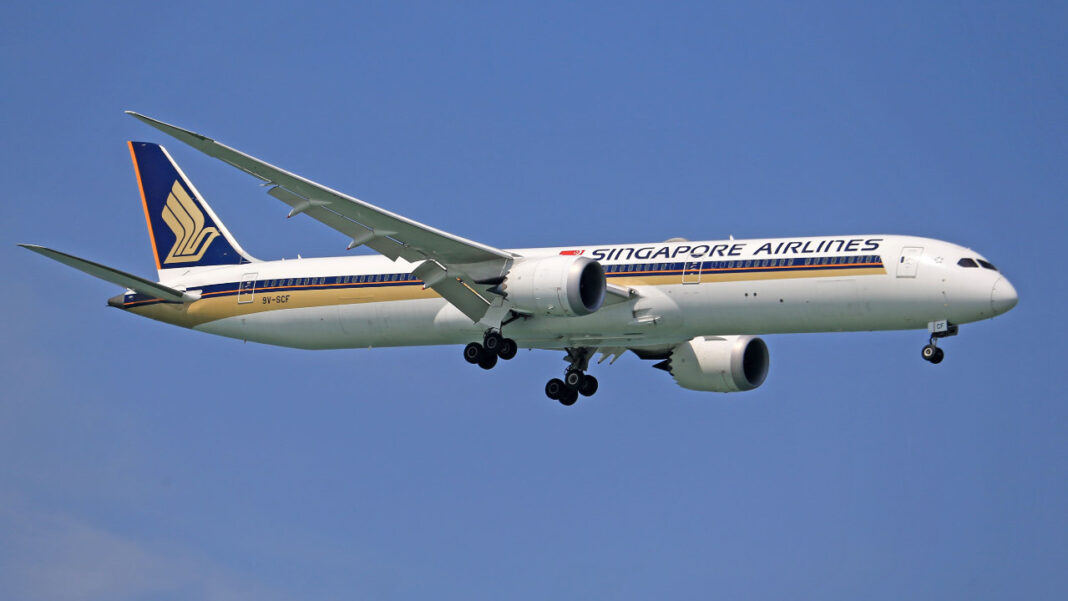

Singapore Airlines plans to enter the offshore yuan bond market with a five-year bond as part of its strategy to expand its sources of financing beyond traditional borrowings in both dollars and Singapore dollars. As indicated in the mandate sheet from Reuters, Singapore Airlines has retained Bank of China, DBS, HSBC and Standard Chartered to facilitate this transaction through global investor calls starting later today with a possible conclusion before the close of business on Tuesday if market conditions allow for such a transaction to close.
This planned issue is not only relevant based on the currency type but shows how the potential investors to this transaction are different from other typical Singapore Airlines transactions. The use of offshore yuan allows issuers access to a different pool of investors plus may create a different pricing dynamic than some existing transactions. Furthermore, this planned transaction is expected to be benchmark size which would typically mean that the total amount raised from this transaction would be sufficiently large to generate a broad interest in trading and that the associated value of that total would meet conventional standards for measuring benchmark size in an offshore yuan market to represent at least one billion yuan or approximately US$147.6 million.
Singapore Airlines has issued a total of S$10 billion (approximately US$7.7375 billion based on the most recent foreign exchange conversion of 1 SGD equal to 0.77375 USD) of multi-currency debt on June 21, 2026, and S$500 million (approximately US$386.9 million) of 10-year notes. They are raising significant amounts of capital through various forms of debt issuance in the capital markets (e.,g. Offshore Yuan Bonds) employing aggressive capital financing strategies.
The Offshore Yuan Bond option taken by Singapore Airlines highlights that Singapore Airlines is not exclusively utilizing domestic financing but rather using offshore financing in order to access additional capital sources with demand being stronger relative to domestic financing. In today’s capital markets, where interest rates change quickly and fluctuate from day-to-day, the ability to diversify source by using multiple alternative financing sources could potentially be more important to the overall cost of borrowed funds than the interest rate paid by the issuer.
Singapore Airlines did not respond immediately to Reuters’ request to comment on the Offshore Yuan Bond transaction; however, the existence of a well-organized and methodical approach to how the transaction was executed demonstrates great care and consideration toward executing this financial transaction, with the company leaving the timeframe to complete the transaction open pending an evaluation of market conditions as to when it would be most advantageous to execute this transaction.
The financing strategy of Singapore Airlines seems to evolve through an incremental process rather than an abrupt one. In January, the airline raised S$500 million from selling 10-year notes to bond investors, and the forthcoming new yuan-denominated transaction continues that momentum into a new currency corridor. This makes it worthwhile for investors to monitor this transaction as it signals not only another source of funding for a well-known Asian airline but also how a blue-chip airline is navigating a more fragmented international capital market in which the nature of currencies may also be a source of strategic advantage.