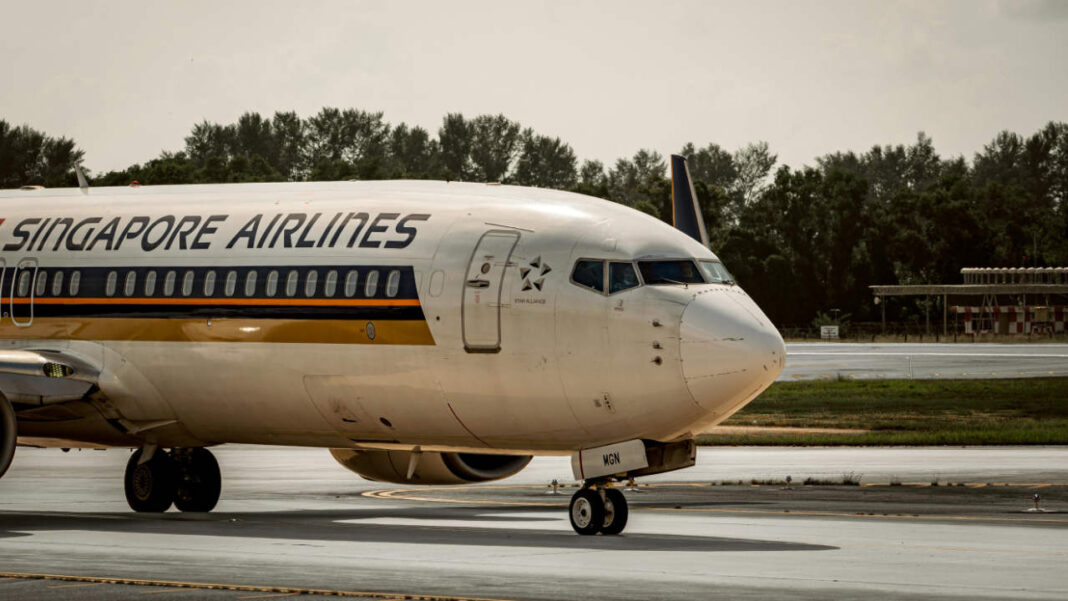

The Singaporean government has postponed the launch of its proposed Sustainable Aviation Fuel Levy until further notice. The delay will give airlines as well as passengers a temporary break from current high prices for jet fuel that have been influenced by the ongoing conflict in the Middle East and the resulting uncertainty surrounding the aviation market. According to the Civil Aviation Authority of Singapore (CAAS), this change in timeline has been made to account for rising prices for fuel and higher levels of price volatility in the aviation marketplace.
The Levy will now effect all airline ticket sales made on or after 1 October 2026, for flights departing Singapore on or after 1 January 2027, instead of beginning on an earlier timeline as originally planned. The levy will be applied to tickets issued for domestic versus international flights, with the levy amount ranging from $1 to $41.60 (or 0.78 USD to 32.30 USD, respectively), depending on whether travel occurs between Singapore and another city in Southeast Asia versus outside Southeast Asia. The introduction of this type of fee represents one of the most meaningful efforts so far among large regional aviation centres to relate decarbonisation and ticket prices.
Singapore’s change of pace is a recalibration — not an abandonment — of the country’s commitment to its green aviation agenda. The Civil Aviation Authority of Singapore (CAAS) has stated that the decision to defer the levy is temporary and that it is still committed to decarbonising aviation in the long run. The purpose of the levy is threefold: It will provide funding for a dedicated supply of Sustainable Aviation Fuel (SAF), cover administrative costs associated with procuring and using SAF, and develop an appropriate system for purchasing/allocating SAF on a large scale.
This policy will also support a wider set of national aviation targets. Specifically, Singapore initially hoped to have SAF comprise 1% of its jet fuel in 2026; that target now moves to 2027. However, the longer-term goal remains the same, with SAF accounting for 3% to 5% of its total jet fuel by 2030, although CAAS will continue to re-evaluate the timing of these goals in light of global developments and other considerations related to the availability of SAF and its use.
The reason context matters is that SAF is regarded as one of the few viable options for achieving significant reductions in emissions within the aviation sector. Per CAAS’s upcoming 2025 amendment bill, SAF is estimated to be responsible for roughly 65% of the required carbon reduction for Singapore-based aviation to reach net zero emissions by 2050. The authority indicated that there will be a fixed levy for the SAF based on the quantity of SAF required and a projected premium on the SAF; however, this structure is designed to minimise cost fluctuations even if the market fluctuates.
The delay may reduce the pressure on travelers immediately; however, it is also a demonstration of the broader truth in the industry as the cost of transitioning to cleaner flying continues to be harder to price. Sustainable aviation fuel continues to be significantly higher than standard jet fuel, and the entire aviation sector works on decarbonising without undermining the economics of connectivity that keep the hub airports like Singapore thriving. CAAS will apply the levy to all departing origin and destination airlines and cargo shipments, as well as general and business aviation flights from Singapore.
Singapore has decided to delay the clock rather than walk away from the concept. The levy will eventually be implemented, and it will still provide necessary financial signals; the goal of establishing a commercially viable method for creating greener air travel remains very much alive. The change has occurred in the timing of the events that will be completed as a result of geopolitical issues that are directly affecting the timing of this aviation decarbonizing development in Asia.