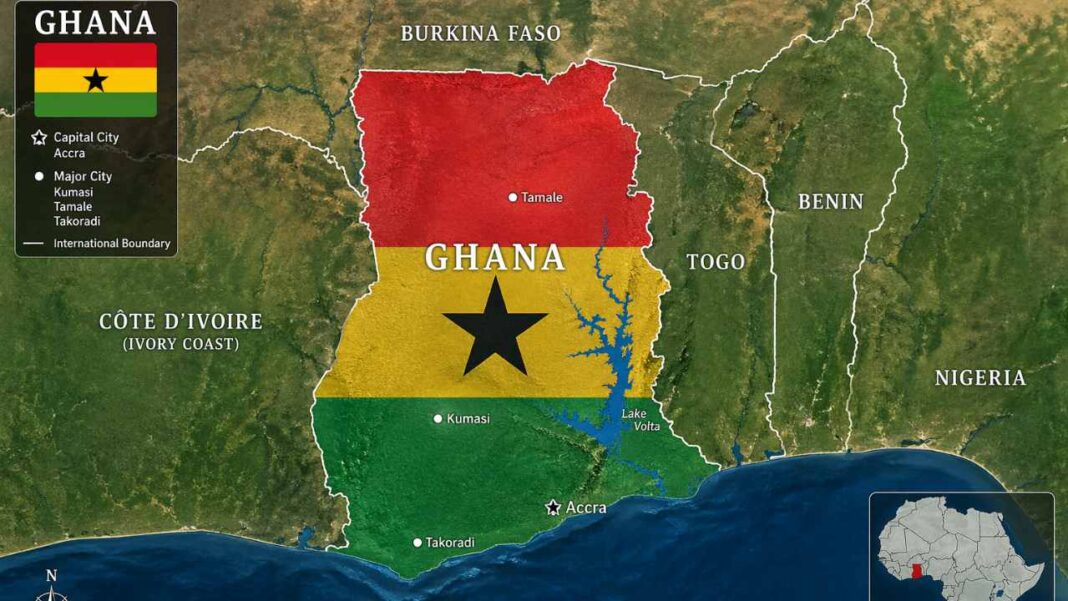
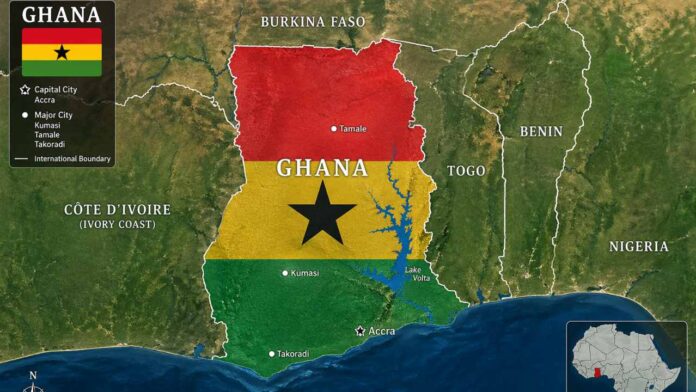

The Commonwealth Business Forum (CBF), held alongside the Commonwealth Heads of Government Meeting (CHOGM) in London on Monday, 20 April ‘26, has long served as a premier platform for member states to broker deals. Additionally, the forum aims to influence international trade policy and foster economic cooperation. This year, Ghana emerged as a standout participant. Ghana leveraged the high-profile gathering. Ghana achieved this by showcasing its robust investment landscape and its burgeoning reputation as the commercial gateway to Africa.
Ghana’s presence in London, led by a high-level delegation of government officials and private sector leaders, conveyed a clear message: the country is not only open for business but is also actively transforming its economy to become the most business-friendly destination on the continent.
Central to Ghana’s pitch at the forum was its hosting of the Secretariat of the African Continental Free Trade Area (AfCFTA). Government representatives emphasised that investing in Ghana provides more than just access to a domestic market of 32 million people; it offers a strategic launchpad for a consolidated African market of 1.3 billion people.
Ghana highlighted its stable democratic credentials and central geographic location. By so doing, Ghana positioned itself as the ideal hub for manufacturing and logistics companies looking to take advantage of the duty-free and quota-free trade environment established by the AfCFTA. Investors at the forum were briefed on the “Integrated Aluminium Industry” besides the “Petroleum Hub” projects. These were designed to create value-added exports that can flow seamlessly across African borders.
The central highlight of the Ghanaian presentation was the progress of the “One District, One Factory” (1D1F) initiative. This policy aims to decentralise industrialisation. That is by establishing at least 1 major factory in each of the country’s 261 districts. At this Commonwealth Business Forum, the Ghanaian delegation showcased successful case studies in agro-processing, pharmaceuticals, & vehicle assembly.
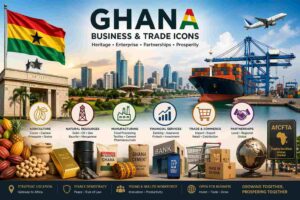
This forum provided an opportunity to court British & Commonwealth investors in partnering with local entrepreneurs. The emphasis was on a move away from the traditional “raw material export” model toward a “value-added” economy. For instance, Ghana, the world’s second-largest cocoa producer, sought investments in tertiary cocoa processing. That was to ensure that more of the global chocolate industry’s value chain remained within the country.
Ghana’s flourishing tech sector was another focal point. The Ghanian delegation highlighted the country’s “Digital Ghana” agenda. The country had witnessed the successful implementation of a national biometric ID system. Furthermore, digital property addressing, besides mobile money interoperability.
Being a global fintech capital, London provided the perfect backdrop for Ghana to engage with venture capitalists and tech giants. The forum explored Ghana’s high mobile penetration rates. Additionally, Ghana’s favourable regulatory environment served as a testing ground for financial inclusion technologies. Discussions were centred on how Commonwealth partnerships could scale Ghanaian startups, besides integrating them into global digital supply chains, particularly by providing access to funding, mentorship, and international markets.
Ghana used the CBF to present its “Energy Transition framework.”. This objective was achieved by portraying alignment with global shifts towards sustainability. ESG (Environmental, Social, and Governance) criteria for modern investors were recognised for their importance. The delegation outlined opportunities in renewable energy, especially in solar & wind power.
Institutional investors showed significant interest. The focus was towards Ghana’s “Green Ghana” project. Additionally, the forum highlighted Ghana’s commitment to reducing carbon emissions. This was while expanding industrial capacity. The forum served as a space to discuss “Green Bonds” and climate financing. These are essential for the country’s goal of achieving universal electricity access. Additionally, the forum addressed the transition to a cleaner energy mix.
Ghana’s participation underscored the enduring value of the Commonwealth connections. This significance extended beyond the technicalities of trade and investment. The shared legal frameworks and common language. Also, historical ties between Ghana and other member states like the UK, Canada & Australia that provide a “Commonwealth Advantage”. This phrase is a term frequently cited during the forum. That’s to describe the reduced cost of doing business within the bloc.
The forum concluded with the signing of several Memoranda of Understanding (MoUs) between Ghanaian businesses and international partners. These spanned from infrastructure development to educational technology.