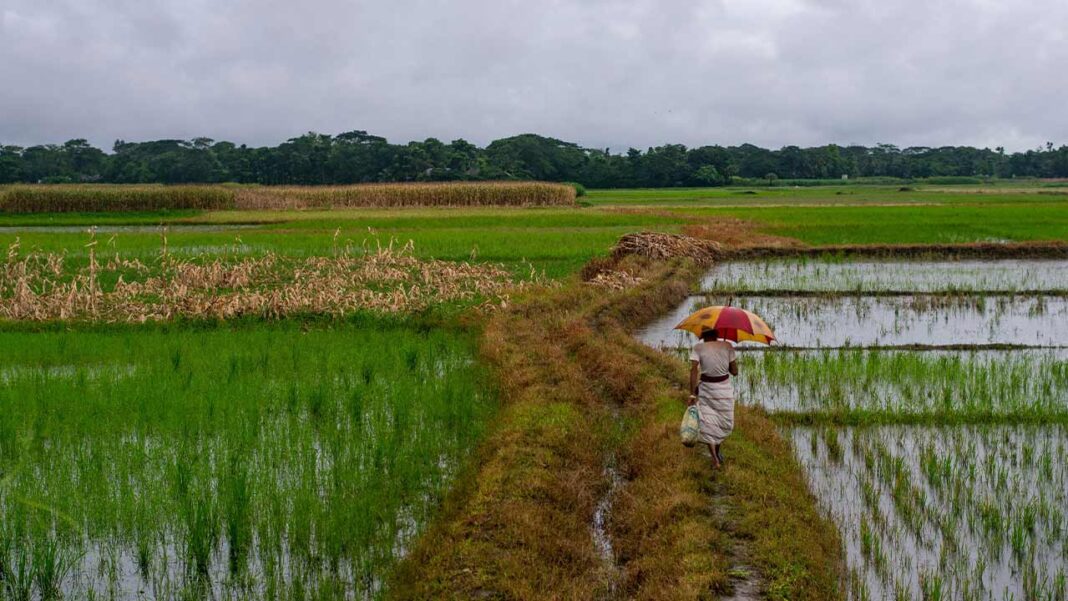

Sri Lanka has approved a Rs. 7.5 billion (US$22.8 million) financial program which is primarily aimed at making sure that paddy fields are strengthened while purchasing during the 2026 Yala harvest, as the government is hoping to provide farmers with a market that is more reliable and protect them from prices that are bound to fall during the harvesting season.
Under the program, rice millers that are small and medium-scaled will be able to obtain interest-free loans of up to Rs. 25 million each to purchase paddies at government-guaranteed prices. The initiative was announced by Agriculture Minister K.D. Lal Kantha during a parliamentary debate on the supplementary estimate.
The scheme comes as the government acknowledges that the Paddy Marketing Board (PMB) does not have sufficient capacity to purchase the entire paddy harvest produced by farmers across the country. By providing financing to private and smaller-scale millers, authorities hope to expand purchasing capacity and ensure farmers have buyers for their crops.
The government of this small Commonwealth region has confirmed guaranteed purchasing prices of Rs. 120 per kilogram for Nadu, Rs. 130 for Samba, and Rs. 140 for Keeri Samba varieties, all of which are types of rice that the country heavily depends on. However, the pricing structure has attracted criticism because some people are concerned that Nadu’s guaranteed price may be insufficient to support farmers on lower-yielding land.
The agriculture minister acknowledged that farmers who are located in areas that produce only around 60 to 80 bushels per acre face significant difficulties. He raised arguments that stated that taking action upon improving productivity on low-yielding farmland is highly essential for increasing the incomes of farmers, instead of allowing a sole reliance on higher purchasing prices.
The government has already started to purchase paddies, as it’s a part of the efforts that are taken to stabilize the market. According to Deputy Agriculture Minister Namal Karunaratne, more than 45,000 metric tons had been purchased by August 25 of this year. The funding that was done most recently is intended to grant the purchasing program an opportunity to continue its proceedings while the Yala harvest reaches the market.
Paddy purchasing is incredibly important to Sri Lanka, as rice is known to be the country’s main staple food. For this reason, paddy cultivation is recognized as a vital source of support for a significant number of rural households. Making sure that farmers receive a predictable price can help protect agricultural incomes while also supporting the country’s domestic rice supply.
However, the program has also generated debates over whether current prices are sufficient to improve the economic position of farmers. Opposition Leader Sajith Premadasa criticized the government’s pricing formula, raising his opinions by arguing that production costs and farm incomes leave some farmers with limited returns from cultivation. He also questioned why Sri Lanka had imported rice despite official estimates indicating domestic paddy production of around 3.2 million metric tons against annual national requirements of approximately 2.5 million tones.
The Rs. 7.5 billion allocations therefore show more than a short-term purchasing measure. It reflects the government’s attempt to balance farmer incomes, rice availability, and market stability while reducing the pressure created when the state lacks sufficient capacity to purchase the national harvest.
For Sri Lanka’s agricultural sector, the success of the program will ultimately depend on whether the loans enable millers to purchase sufficient quantities of paddies at the guaranteed prices and whether farmers receive a fair return for their harvest. With the Yala season underway, the initiative could play an important role in determining how effectively the country manages its paddy market and protects its food supply.