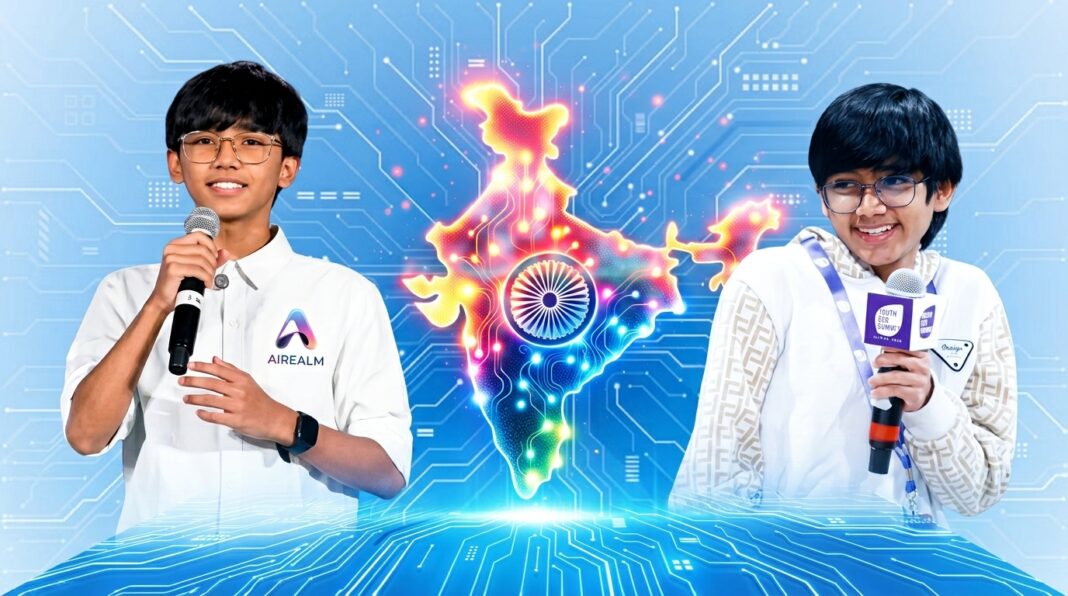

India (Commonwealth Union)_ Artificial intelligence is no longer something that only technology professionals or large companies work with. In India, a growing number of young people are learning how AI works, experimenting with new tools and even turning their ideas into businesses. Sixteen-year-old Raul John Aju from Kochi is one example of how quickly that change is taking place. While studying commerce in Class 12 at North Edappally GHSS in Kunnumpuram, Raul is also building an AI startup. He began exploring technology when he was just nine, initially through video editing before moving towards artificial intelligence. His first major project came from a school science assignment.
Raul created MeBot, a robot designed to interact with people and speak in his own voice. What began as a classroom experiment eventually developed into a wider interest in creating AI-based solutions. Raul says his access to technology increased after his father joined Adobe, allowing him to use professional tools and explore AI at an early age. Instead of treating technology simply as entertainment, he began using it as a way to learn, experiment and solve problems. His journey has since moved well beyond school projects. His startup AIRealm Technologies employs about 15 people and has reportedly trained nearly five lakh students around the world.
Raul says he has developed around 15 AI tools, including MeBot, RESQ AI, ZapGap, Investo AI and FeedFye, aimed at different practical uses. His father also works in the business and earns Rs 2 lakh a month. For Raul, however, the arrangement is not simply a family decision. His father has professional experience with companies including Amazon, Adobe, Wipro and IBM, making him both an employee and a mentor. The teenager’s work also shows how young AI developers are beginning to focus on problems outside the technology sector. JustEase, developed with the Kerala government, is designed to help people find information during emergencies, while Rescue AI provides users with access to legal information and guidance.
Raul’s experience reflects a broader shift in how young Indians are approaching technology. Smartphones, online learning platforms and increasingly accessible AI tools have made it possible for children and teenagers to experiment without waiting for formal education or professional careers. Additionally, his participation in the India AI Impact Summit in Delhi, where he spoke with UN Secretary-General Antonio Guterres, further highlighted the growing role of young people in the country’s AI ecosystem. For India’s young generation, AI is no longer just a technology to use, it is increasingly becoming a tool they are learning to create and shape themselves.