
Scientists have demonstrated for the first time that seabirds suffer harm not only from ingesting plastic. Plastic actually kills them. A researcher from Charles Sturt University led the study. Her name is Dr Jennifer Lavers. She works at the university’s Gulbali Institute for Agriculture, Water and Environment.
This discovery answers a question that scientists have struggled with for fifteen years. Experts call it one of the “grand challenges” in pollution science. Until now, nobody could prove that plastic pollution actually causes seabird populations to shrink. Many people only knew that plastic could injure single birds. Dr Lavers and her team have now shown something bigger. Plastic waste can cause whole populations to decline.
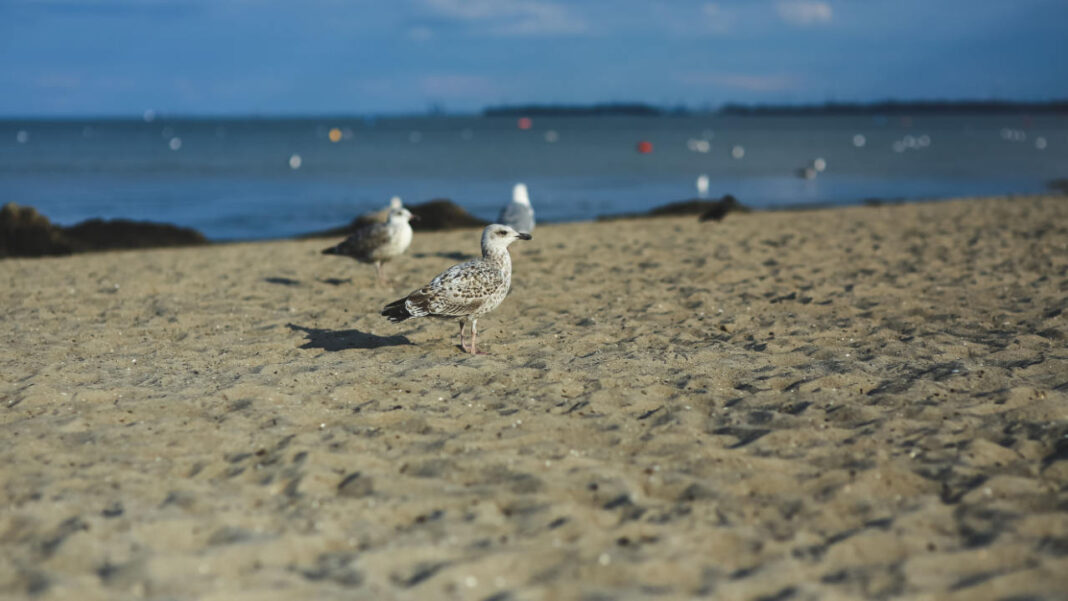
The study looked at Sable Shearwaters. This is a large seabird that usually eats squid near the Australian coast. The research team gathered fifteen years of data. They tracked birds using a method called mark-recapture. This means they tagged birds and recorded which ones came back. The study has just been published in a major science journal, Proceedings of the National Academy of Sciences.
The results are worrying. Many birds in the study had eaten more than one gram of plastic. This is a common amount. Birds with this much plastic inside them were at least eleven per cent less likely to survive. They were less likely to return to their breeding colony. That colony is on Lord Howe Island, in the western Pacific Ocean.
The situation worsens for birds that consumed even larger amounts of plastic. Birds that swallowed more than five grams of plastic almost never came back. In other words, heavy plastic loads were nearly always fatal.
Dr Lavers explained why this finding matters. It has always been difficult to collect enough proof of plastic’s true effect on wild animals. Because good data was rare, some people wrongly believed plastic posed little threat to wildlife. Her team used fifteen years of tracking to clearly link how much plastic a bird ate to its chances of survival. The pattern was simple. The more plastic a bird swallowed, the less likely it was to live and breed again.
Dr Lavers also pointed out that research on ocean plastic is behind other environmental problems. She said scientists have studied plastic pollution roughly thirty years later than other major environmental issues. Because of this delay, there is still very little solid data showing how plastic affects seabird numbers worldwide.
She believes the problem reaches far beyond this one species. Well over one thousand species eat plastic, including animals living in oceans, rivers, lakes, and on land. For almost all of them, scientists still lack enough evidence to prove plastic is harming their populations. However, Dr Lavers warned that this lack of proof does not rule out the possibility of harm. She said the damage is real and ongoing. Without quick action to stop plastic pollution, the problem will continue to worsen.
Currently, Sable Shearwaters have a long lifespan. Because of these factors, the Lord Howe Island colony is only shrinking slowly. But researchers warn that the situation could change fast. As plastic pollution keeps building up in the Pacific Ocean, its effects could catch up with the colony much sooner than expected.
The research team has made a recommendation. They say scientists monitoring seabird colonies should look beyond the usual measures. Simply tracking chick survival and adult survival rates is not enough. New methods are needed to fully understand how plastic is affecting these birds.
All handling of birds during the study followed strict rules. It was carried out under an official Animal Research Authority. The Charles Sturt University Animal Ethics Committee approved every step of the process.