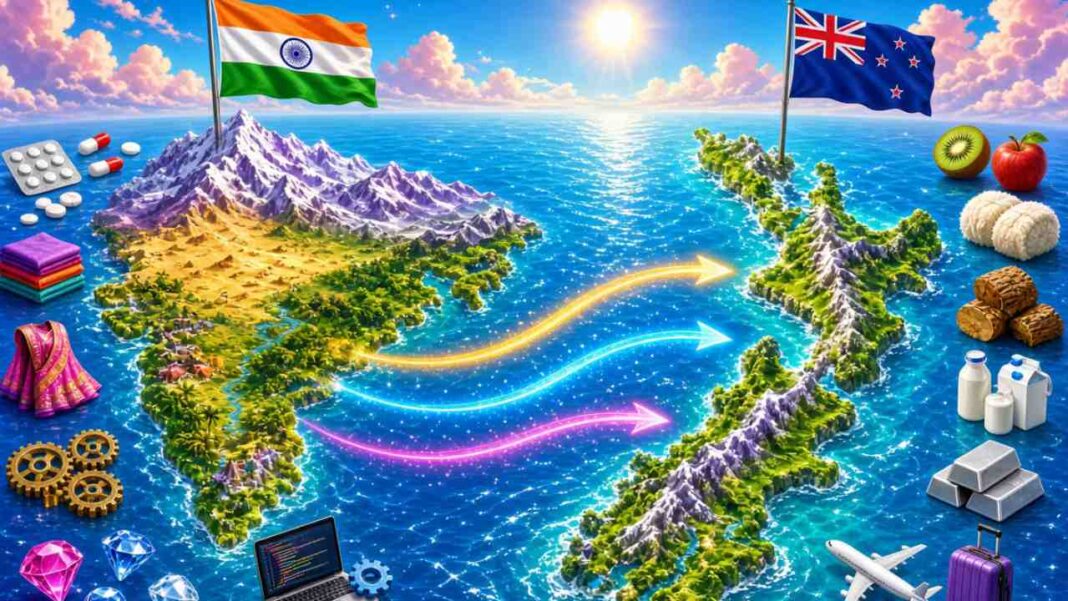

India and New Zealand are preparing (NZ) to put their long-awaited free trade agreement (FTA) into operation on Tuesday, 20 October 2026, a move expected to give Indian exporters substantially wider access to the NZ market while deepening commercial ties between the two countries.
Union Commerce and Industry Minister Piyush Goyal announced the implementation date on Monday, 21 September, following the completion of domestic approval procedures in both countries. The agreement, signed in New Delhi on 27 April 2026, will provide duty-free access for 100% of Indian exports to NZ from the first day of implementation, according to India’s Ministry of Commerce and Industry.
The October launch represents the transition of the agreement from a negotiated trade framework into an operating commercial arrangement. NZ completed its parliamentary process on Wednesday, 16 September, while both countries confirmed that ratification procedures had been completed by 21 September.
Exporters prepare for a broader NZ market
For Indian businesses, one of the principal attractions of the agreement is the removal of tariff barriers across the country’s exports. Government information identifies textiles and apparel, leather and footwear, engineering products, pharmaceuticals, agricultural goods, and processed foods among the sectors expected to gain from improved market access.
The elimination of duties may improve the price competitiveness of Indian products in NZ, particularly for manufacturers and smaller companies seeking to expand beyond established markets. The agreement is also designed to strengthen opportunities for micro, small, and medium-sized enterprises by lowering one of the costs associated with entering an overseas market.
However, tariff-free access does not remove every requirement faced by exporters. Companies may still need to meet NZ’s product standards, regulatory requirements, customs procedures, and applicable rules of origin. NZ Trade and Enterprise has advised exporters to examine the agreement’s detailed requirements and prepare for implementation rather than assuming that tariff reductions alone may guarantee commercial success.
Ambitious target for bilateral commerce
India and NZ have also established an ambitious objective for the relationship. Under their Strategic Partnership and Roadmap to 2030, the 2 countries have set an aspirational goal of doubling 2-way trade in goods and services to NZ$7 (USD 3.99) billion, approximately ₹35,000 crore, by 2030.
NZ’s official figures put annual 2-way trade at around NZ$3.95 billion (USD 2.25). Therefore, businesses and policymakers can use the target as a clear benchmark to measure the commercial impact of the FTA in the coming years.
The agreement is not limited to merchandise trade. Services, investment, and professional mobility are also covered, creating potential avenues for cooperation involving technology, education, healthcare, and other knowledge-intensive activities. The pact is expected to provide Indian students and professionals with additional mobility opportunities.
Investment forms another pillar
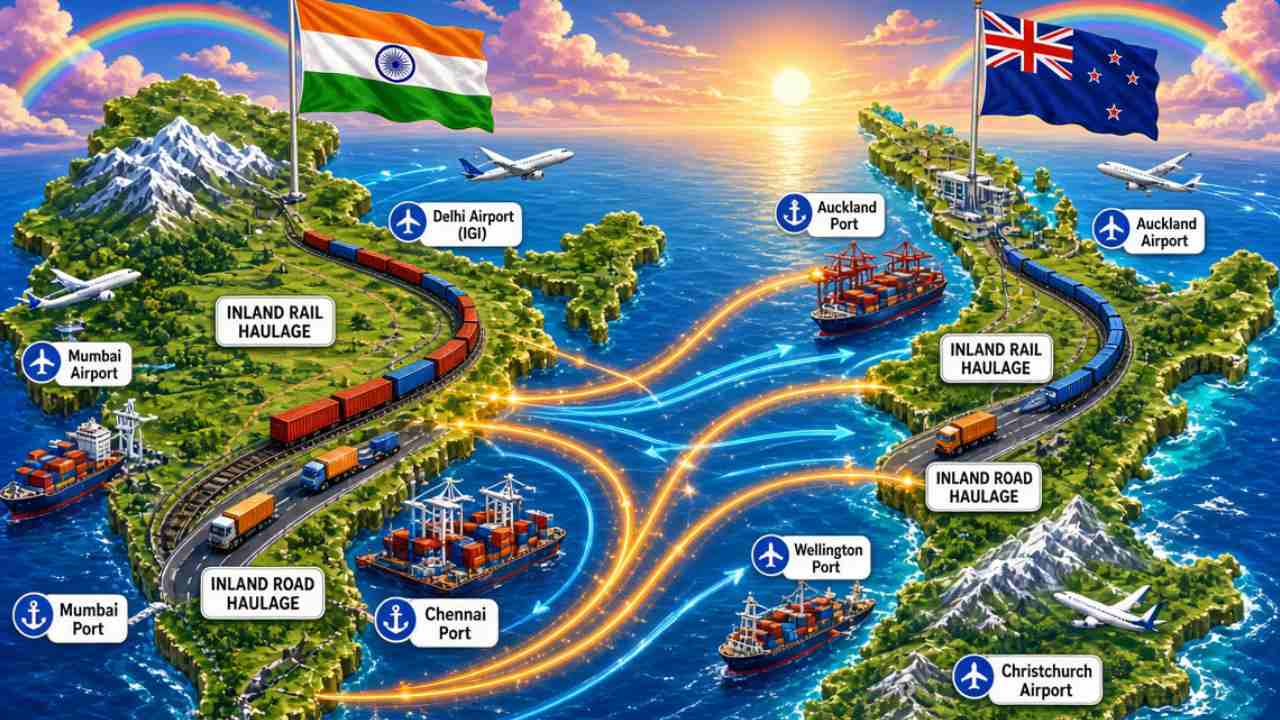
Investment is another major component of the new economic relationship. NZ has committed to facilitating USD 20 billion in investment in India over 15 years. This potentially supports projects involving infrastructure, manufacturing, technology, and other areas of economic activity.
Investment commitments may give the trade agreement significance beyond the immediate reduction of customs duties. Increased investment may help establish supply chains and production partnerships besides distribution networks that support 2-way commerce over a longer period.
NZ exporters may also gain improved access to India. According to the NZ government, 57% of NZ’s exports to India will become tariff-free when the agreement enters into force, while tariff reductions may eventually cover about 95% of its exports. Key NZ interests include sheep meat, wool, coal, forestry, and wood products, as well as preferential access for products such as apples and kiwifruit.
A new phase in bilateral economic relations
The FTA follows an accelerated period of diplomatic and economic engagement. Prime Minister Narendra Modi’s July 2026 visit to NZ—his first visit to the country in 4 decades—helped provide additional momentum to the implementation of the agreement. The two governments subsequently placed the trade pact within a wider strategic partnership.
With 20 October now confirmed, exporters on both sides have a definite timetable for adjusting their commercial strategies. The agreement offers India a new way to increase exports in addition to diversifying its international markets. For New Zealand, it opens improved access to India’s vast consumer and business markets.
The effectiveness of the agreement may ultimately depend on how quickly businesses grab advantage of the new provisions and establish commercial relationships besides meeting the regulatory requirements of their respective markets. Nevertheless, the 20 October implementation marks an important shift in India-NZ economic relations, placing trade expansion, investment, and business mobility at the center of the next stage of bilateral cooperation.