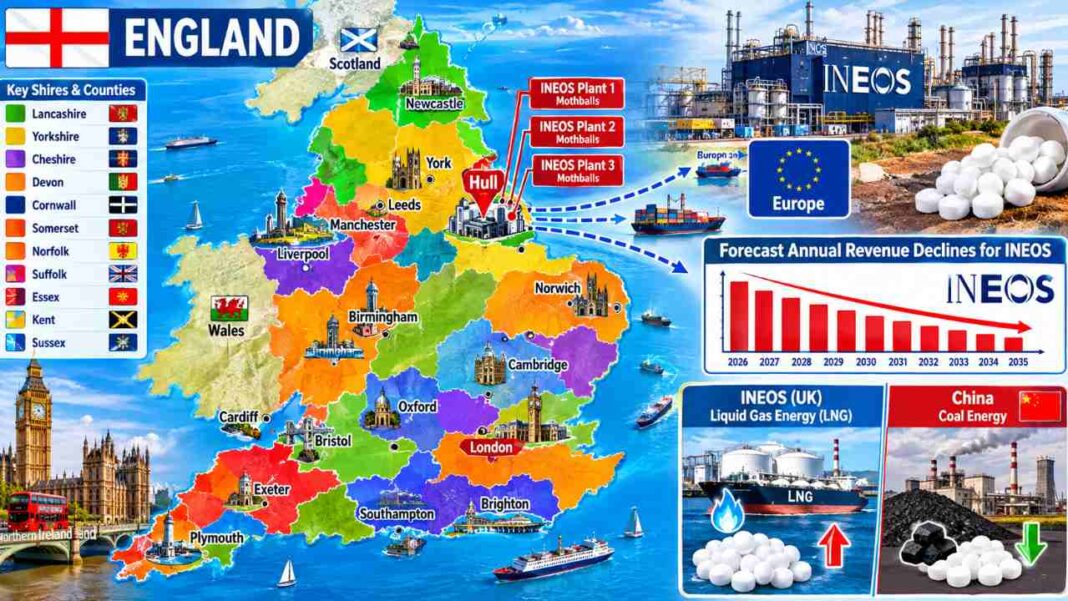

INEOS is suspending activity at 3 major chemical facilities in Hull, highlighting the growing pressure that elevated energy prices are placing on energy-intensive manufacturing across Britain and continental Europe.
On Tuesday, 22 September, the company announced that it may mothball its three world-scale plants in Hull until further notice. 2 facilities had already stopped production, while the third was expected to come offline within days. INEOS said the decision was driven by European gas prices that have made local production increasingly difficult to sustain against competitors in the United States (U.S.) and China.
The facilities produce acetyl-related chemical intermediates that serve a wide range of downstream industries. Their output is used in products connected with pharmaceuticals, clothing, cosmetics, detergents, construction, and other manufacturing activities. Industry publication ICIS reported that the Hull complex represents Europe’s remaining industrial-scale acetyls capacity, following earlier closures elsewhere on the continent.
The immediate economic implications extend beyond the plant gates. INEOS says the operations support almost 4,000 highly skilled jobs and associated supply-chain activity. Other reporting has put the number of employees directly connected with the sites at roughly 300, meaning a prolonged shutdown may have consequences for contractors, suppliers, and surrounding businesses as well.
At the center of the dispute is the cost of natural gas. INEOS says European gas is currently around 12 times pricier than gas in the U.S., while production based on Chinese coal is also significantly cheaper. Because gas is required both to power the Hull operations and as an input into the manufacturing process, changes in energy prices have an unusually large effect on production economics.
INEOS Chairman Sir Jim Ratcliffe has argued that the energy-price differential is undermining European manufacturing competitiveness. The company also maintains that its Hull facilities are highly efficient and that shutting them may shift production to overseas plants with higher emissions.
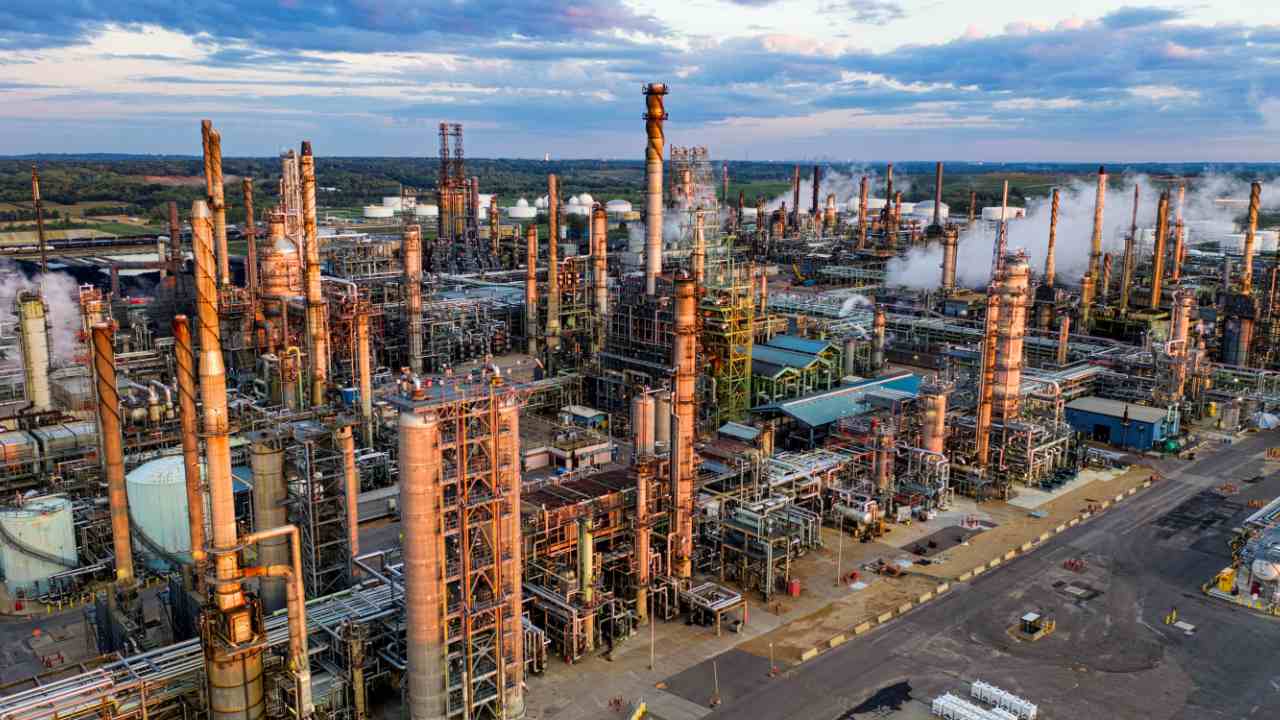
The decision has consequently reopened a wider debate over Europe’s industrial-energy strategy. Chemical manufacturers require substantial quantities of energy, making them particularly exposed to prolonged differences between European and overseas energy prices. The European chemicals sector has already experienced plant closures and production reductions following the energy shock that followed the start of the Russia-Ukraine war.
For the UK, the Hull announcement carries an additional significance because the plants supply chemical building blocks to industries across Europe. A prolonged loss of domestic production may increase reliance on imports and leave manufacturers more exposed to international supply-chain disruptions.
The British government has said it recognizes the concerns surrounding the chemicals industry and has pointed to financial and policy measures designed to support strategically important producers and address industrial energy costs.
Whether the Hull plants eventually restart will depend heavily on future energy prices, market conditions, and the competitiveness of European chemical production. The mothballing decision currently serves as a further clear sign of how high energy costs are reshaping Europe’s industrial landscape.