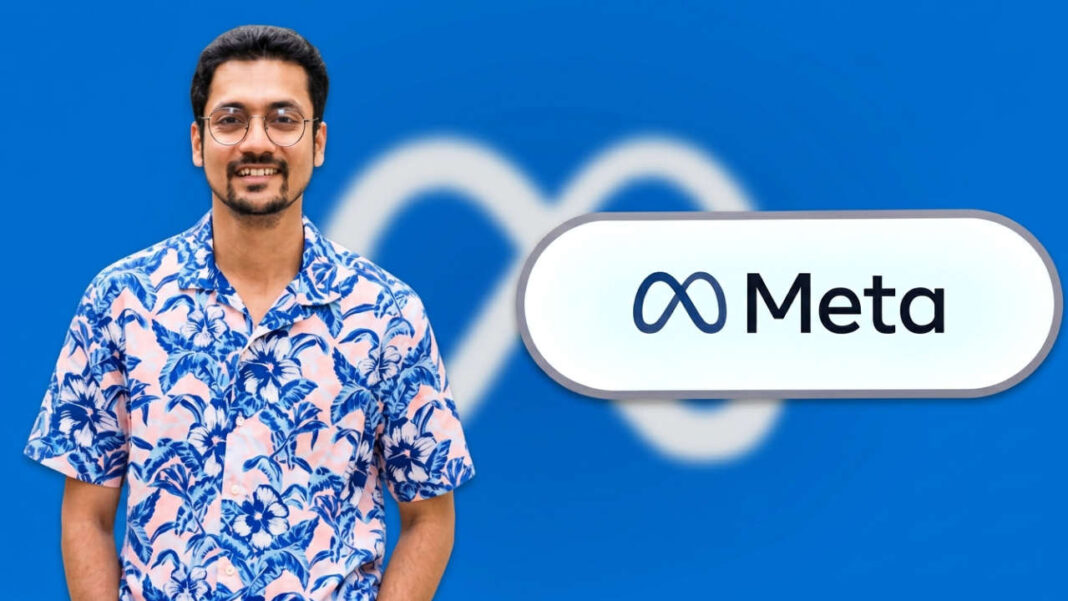

India (Commonwealth Union)_ India’s rising clout in artificial intelligence is being observed by some of the world’s biggest tech firms. Indian-origin researchers are proving to be valuable players in the global race to build more advanced artificial intelligence (AI) systems. One such name is Indian-origin AI engineer Trapit Bansal whose reported move to Meta has shone a light on the rising demand for specialist AI talent. Bansal, an alumnus of the Indian Institute of Technology (IIT) Kanpur and ex-OpenAI researcher, reportedly joined Meta’s Superintelligence Labs. Reports have put his compensation package at around ₹800 crore, although the exact structure and terms of the deal have not been independently established.
Also read: Meet the world’s youngest author: How the Indian American boy made it to the Guinness World Records!
Announcing his move on X, he wrote, “Thrilled to be joining Meta! Superintelligence is now in sight.” His foray into artificial intelligence had a strong academic base. Bansal studied Mathematics and Statistics at IIT Kanpur from 2007-2012. Later, he joined the Indian Institute of Science (IISc), Bengaluru as a Research Assistant and worked on machine learning and Bayesian modeling. He subsequently moved to the University of Massachusetts Amherst in the United States, earning a master’s degree and a PhD in computer science. His research covered natural language processing, deep learning and meta-learning, areas that now play an important role in developing advanced AI systems.
Bansal interned at some of the world’s biggest tech companies, including Facebook, Google, Microsoft and OpenAI, before joining full-time in Meta. These opportunities gave him experience with various aspects of machine learning and develop the expertise to solve complex AI problems. At OpenAI, Bansal worked on AI reasoning research and reinforcement learning. His work was associated with efforts to develop models capable of handling more complex tasks. He later moved to Meta as the company stepped up its efforts to build advanced AI systems and compete with rivals in the rapidly evolving field.
Bansal’s career also reflects why technology giants are investing heavily in Indian-origin researchers. Strong mathematical foundations, specialised education, international research experience and the ability to solve difficult technical problems can make professionals highly sought after. His reported compensation package may appear extraordinary, but his career was built over many years of study, experimentation and research. The race for AI talent is heating up, and Bansal’s story is an important lesson for future engineers: long-term investment in knowledge and research can lead to opportunities on the world stage. India’s AI story has moved past its massive tech workforce. Its researchers are now steering the direction of the industry itself.