
Markets slid after the EU halted ratification of a U.S. trade deal, as businesses prepared for a new 15% global tariff set to begin on Wednesday, 5 February 2026.
Meanwhile, stock markets stumbled as global trade faced renewed uncertainty stemming from Trump’s tariff threats.
Trump has warned of “obnoxious” tariffs as both the UK and the EU seek clarity on trade deals.
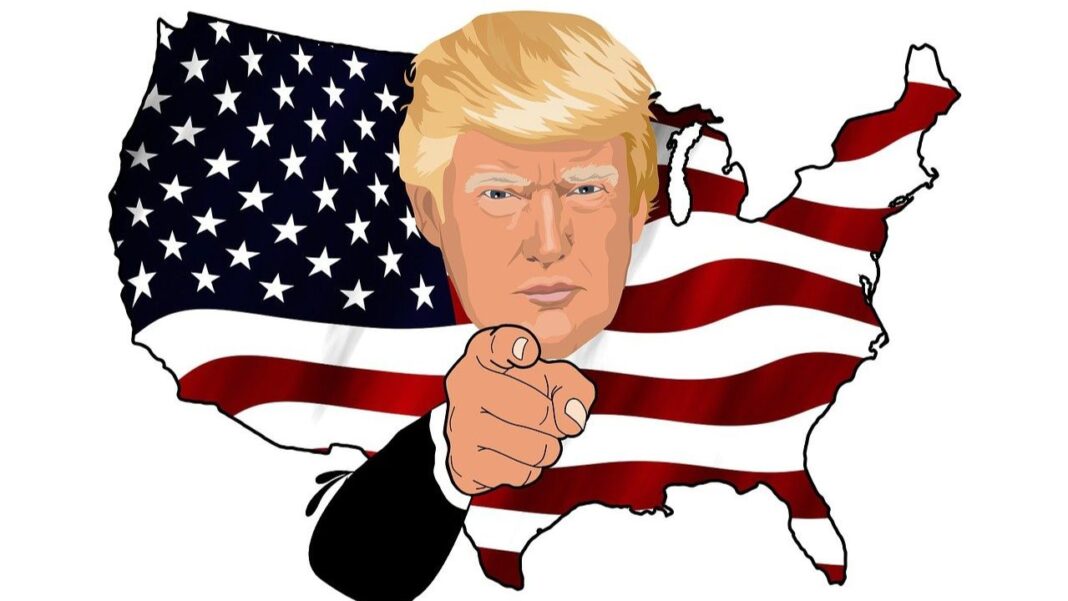
Donald Trump declared that he could use tariffs in a “much more powerful and obnoxious way” than he has so far.
Posting on his Truth Social network, the U.S. president again attacked the U.S. Supreme Court for ruling against his sweeping global tariffs last Friday, 20 February. Trump described the justices as “incompetent.”
He also claimed that the court had “accidentally and unwittingly” expanded his presidential powers on tariffs.
Trump wrote:
“The Supreme Court of the United States accidentally and unwittingly gave me, as President of the United States, far more powers and strength than I had before their ridiculous, dumb, and very internally divisive ruling.
For one thing, I am capable of using licences to do absolutely ‘terrible’ things to foreign countries—especially those countries that have been RIPPING US OFF for many decades—but incomprehensibly, according to the ruling, can’t charge them a licence fee. BUT ALL LICENCES CHARGE FEES; so why can’t the United States do so? You do a licence to obtain a fee!
The opinion doesn’t explain that, but I know the answer! The court has also approved all other tariffs, of which there can be many. They can all be used in a much more powerful and obnoxious way, with legal certainty, than they were initially used.
Our ‘competent’ Supreme Court did a great job for the wrong people, and for that they should be ashamed of themselves (but not the Great 3!).”
This was a reference to the minority of three justices who backed Trump in last week’s ruling.
Stocks fell on Wall Street as the Supreme Court’s rejection of Donald Trump’s sweeping global tariffs on Friday, 20 February, continued to reverberate across global markets.
The main U.S. share indices were solidly in the red. The Dow Jones Industrial Average fell almost 850 points, or 1.8%, on Friday.
Investors believed that the ruling—declaring tariffs imposed under the International Emergency Economic Powers Act (IEEPA) unlawful—had created fresh uncertainty, particularly as Trump retaliated by announcing a new 15% global tariff.
The U.S. president reiterated that he was capable of using tariffs in a “much more powerful and obnoxious way,” as both the UK and the EU sought urgent clarity on the U.S. trade deals struck last summer.
Trump threatened to ramp up his global tariff on Monday, 23 February, following last week’s Supreme Court ruling that he had overstepped his legal authority in imposing his so-called “Liberation Day” measures announced last year.
A spokesperson for UK Prime Minister Keir Starmer said he did not expect Trump’s new 15% global tariff—announced on Saturday, 21 February—to affect the majority of the UK–US economic deal agreed last year.
However, it remains unclear whether the new tariff, collected from Tuesday, 17 February, will be set at the 10% rate on most goods agreed last May, the 15% rate, or whether customs duties will revert to pre-reciprocal-day tariffs.
Amid this uncertainty, the European Parliament decided on Tuesday, 24 February, to pause the ratification process for the U.S. trade deal—a move that further pressured markets.
Following this development, Trump warned:
“Any country that wants to play games with the ridiculous Supreme Court decision—especially those that have ‘ripped off’ the USA for years, and even decades—will be met with a much higher tariff, probably worse than that which they recently agreed to.”