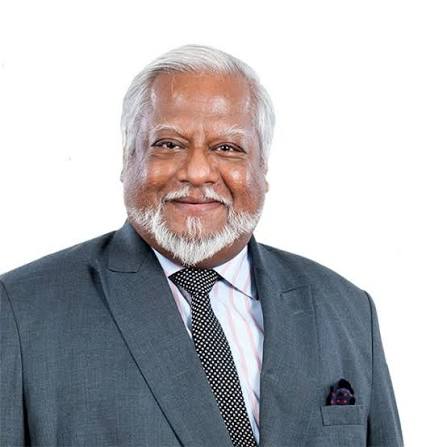


India (Commonwealth Union)_ India’s ambitions to become a global hub for artificial intelligence and cloud computing received a significant boost after data centre operator AirTrunk announced plans to invest $30 billion (around Rs 3 lakh crore) in the country’s digital infrastructure sector over the next several years. The announcement marks one of the largest investments in India’s data centre industry and highlights the country’s growing importance in the global race to build the infrastructure needed for AI-driven technologies. Accordingly, Prime Minister Narendra Modi welcomed the move, saying it would strengthen India’s cloud and AI capabilities while supporting economic growth, innovation and employment generation.
Also read: Tanzania and Singapore strengthen ties with five major cooperation agreements!
AirTrunk, an Australia-based hyperscale data centre company founded by Bangladesh-born entrepreneur Robin Khuda, plans to deploy the investment by 2030. The company intends to develop approximately 5 gigawatts of new data centre capacity across multiple Indian states and union territories to meet the rapidly rising demand for cloud services, artificial intelligence applications and enterprise computing. The investment comes as governments and tech companies around the world are pouring billions of dollars into digital infrastructure as AI adoption accelerates. Data centres have become the backbone of this transformation, providing the computing power required to support advanced AI models, cloud platforms, digital services and large-scale business operations.
AirTrunk entered the Indian market earlier this year through its acquisition of Lumina CloudInfra. The company is backed by investment giant Blackstone and the Canada Pension Plan Investment Board (CPPIB), two major global investors with significant interests in digital infrastructure projects. Prime Minister Modi said investments of this scale would help reinforce India’s position as a preferred destination for AI and cloud computing while creating jobs, strengthening local supply chains and encouraging technology-led development. As India’s digital economy continues to expand, large-scale infrastructure projects are increasingly viewed as critical to sustaining future growth.
Also read: Meet the Indian-origin football players set to shine in the FIFA World Cup 2026!
AirTrunk founder and Chief Executive Officer Robin Khuda met Prime Minister Modi during his visit and described India as one of the company’s most important long-term markets. According to Khuda, one of the key takeaways from recent discussions was the strong sense of urgency surrounding AI development. He noted that countries are competing intensely to attract AI-related investments and that investors typically favor markets that offer policy certainty, efficient coordination and the ability to execute projects quickly. AirTrunk already has a development pipeline of around 600 megawatts across Mumbai, Chennai and Hyderabad. The newly announced investment is expected to significantly expand the company’s footprint and establish India as a major pillar of its future growth strategy.
Who is Robin Khuda?
Robin Khuda’s journey to become one of the most influential names in the global data centre industry started in Dhaka, Bangladesh, where he was born and raised. He moved to Australia in 1997, studying accounting at the University of Technology Sydney before completing an MBA from Manchester Business School. He also obtained professional accounting qualifications which helped to shape his early career. Before launching AirTrunk, Khuda held senior leadership positions in the technology and telecommunications sectors. He worked with Fujitsu Australia and New Zealand and later became Chief Financial Officer of PIPE Networks, where he played a key role in the company’s merger with TPG Telecom.
Also read: How this Indian teen earned a spot on the Forbes 30 Under 30 List?
Khuda later co-founded NEXTDC, which grew into Australia’s largest independent data centre operator. Building on that experience, he founded AirTrunk in 2015. During the early days of the company, with considerable financial difficulties and heavily relying on personal savings, he managed to build Australia’s first hyperscale data centres in Sydney and Melbourne by 2017. AirTrunk’s growth then took off at a rapid pace over the next few years. In 2024, a consortium led by Blackstone bought the company in a landmark $24 billion transaction, one of the largest digital infrastructure deals in the world. Khuda remained at the helm as founder and CEO, continuing to lead the company’s expansion across Asia-Pacific and the Middle East.
Today, AirTrunk operates and develops major facilities in Sydney, Melbourne, Tokyo, Osaka, Singapore and Johor Bahru in Malaysia. The company has also expanded its global partnerships, including a recent collaboration with Saudi Arabian AI company HUMAIN. Khuda’s achievements have garnered international praise. In early 2026, Forbes Asia included him among Australia’s 50 richest individuals, estimating his net worth at around $2 billion. He was also named Business Person of the Year by The Australian Financial Review in 2023 and joined the board of the Business Council of Australia in 2025. AirTrunk’s investment is part of a broader wave of AI and digital infrastructure spending flowing into India.
Also read: Why the UN is celebrating this Tamil Nadu farmer?
Global technology firms and domestic conglomerates are increasingly viewing the country as a long-term growth market. Google has announced plans to invest roughly $15 billion in India between 2026 and 2030, while Indian business giants Reliance Industries and the Adani Group have also unveiled massive commitments toward AI and data infrastructure projects. The investment boom is a testament to confidence in India’s growing digital economy, which has one of the largest internet user bases in the world, rapidly expanding digital services and increasing demand for AI-powered applications, quickly establishing itself as a key hub for the infrastructure that will power the next wave of technological innovation.