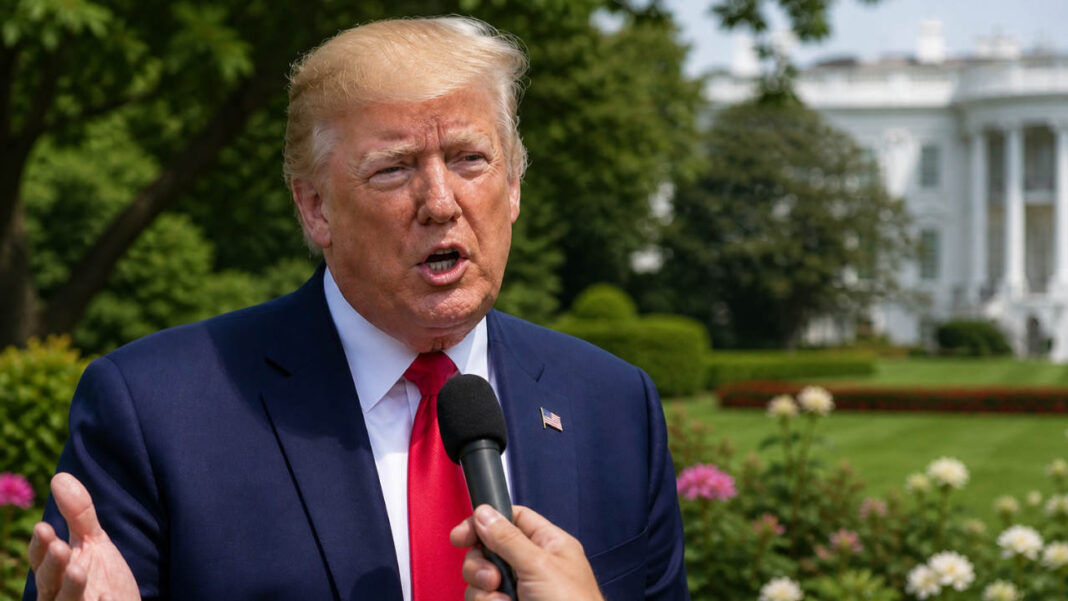

US President Donald Trump has told Congress that fighting between the United States and Iran has now “ended”, even though no long-term peace agreement has been signed yet. He said a ceasefire agreement has stopped active combat, and for that reason, he believes the legal countdown for congressional approval no longer applies.
Under US law, when a president sends troops into conflict, Congress must approve the action within 60 days. If not, the fighting is supposed to stop. This rule comes from the 1973 War Powers Resolution, which was created to limit a president’s ability to keep the country in long wars without lawmakers’ consent.
But Trump argued that the situation has changed. In a letter to Congress, he said there has been no exchange of fire between US forces and Iran since April 7, 2026. He added that the “hostilities” that began earlier in the year are now over, so the clock on the 60-day rule should not matter anymore.
The ceasefire came after weeks of tension and military strikes between the two countries. The US and Israel initiated the conflict by attacking Iran, claiming their actions aimed to halt Iran’s nuclear weapon development. Iran strongly denied this claim and responded with its attacks on US allies in the region, including targets in the Gulf.
Since then, both sides have stopped direct fighting. However, the situation remains unstable. There is still no permanent peace agreement, and talks are ongoing. Reports from Iranian state media said that Tehran has sent a proposal for negotiations through intermediaries in Pakistan. The details of the proposal have not been made public.
Trump spoke to reporters in Florida, informing them about a potential deal that he would closely review. He did not confirm any agreement but said discussions were ongoing. He also said Iran was “decimated” by the conflict and warned that US strikes could resume if Iran acted aggressively again.
At the same time, Trump said he is not satisfied with Iran’s current position in negotiations. He claimed that Iran’s leadership is confused after losing several top military officials during the fighting, which has likely contributed to their inability to effectively negotiate and respond to US demands.
Inside Washington, the legal debate has become more intense. Defence Secretary Pete Hegseth told lawmakers that the 60-day clock may have paused because of the ceasefire. But Democratic Senator Tim Kaine disagreed, saying the law does not support that interpretation. Some legal experts also question the administration’s view. Professor Heather Brandon-Smith of Georgetown University Law said a ceasefire does not automatically end a war in legal terms. She explained that only a permanent end to conflict would likely stop the War Powers timeline.
Meanwhile, Congress has struggled to force a clear vote on whether to formally approve or restrict the military action. Political divisions have made it difficult for lawmakers to reach agreement. On the economic side, the US Treasury warned that any company paying fees to Iran for passage through the Strait of Hormuz could face sanctions. The shipping route remains highly disrupted, affecting global trade.
The broader conflict has also rekindled attention to past US-Iran tensions. Iran was part of a 2015 nuclear deal with world powers, but the US withdrew from the agreement in 2018 during Trump’s first term, which increased tensions that eventually led to renewed confrontation years later. For now, the fighting has stopped, but the political and legal battle in Washington is still very much alive.