
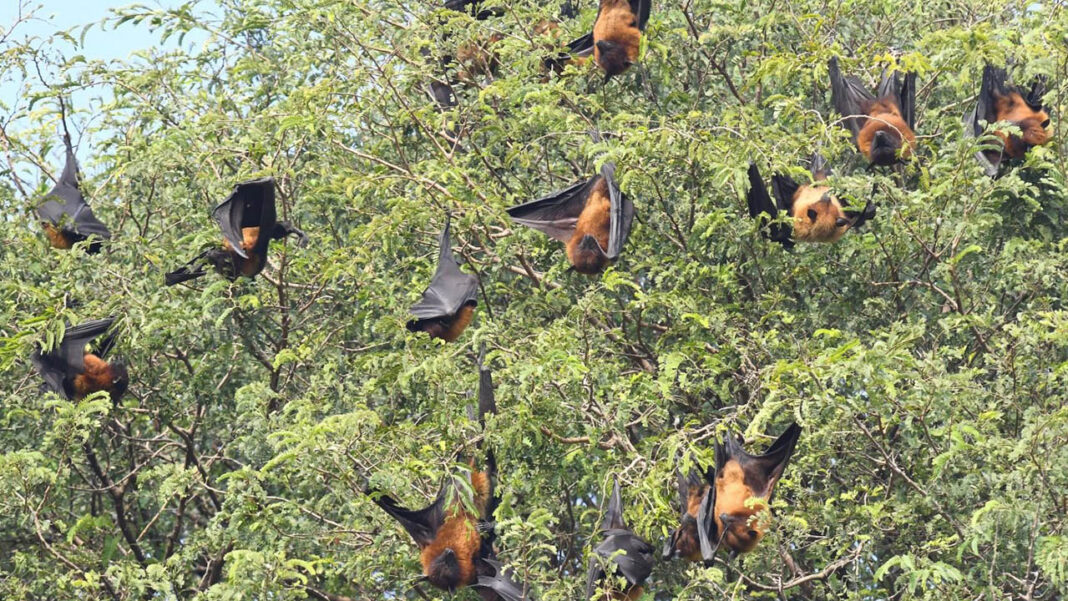
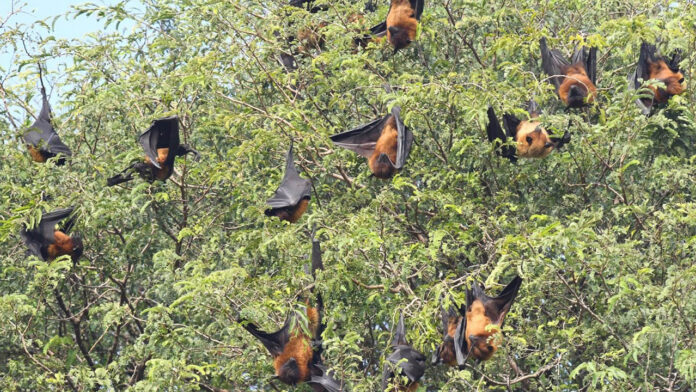

Earth and Habitat (Commonwealth Union) _ Hundreds of Indian flying foxes, scientifically known as Pteropus medius (formerly Pteropus giganteus), have tragically perished across northern India due to severe heatwaves. The soaring temperatures, exceeding 45˚C in places like Rajasthan, led to multiple mass deaths among these large fruit-eating bats. Dau Lal Bohra, a wildlife researcher, and head of the Department of Zoology at Seth Gyaniram Bansidhar Podar College in Rajasthan, highlighted that the bats succumbed because nearby water sources crucial for cooling had dried up. Despite efforts by municipal authorities to mitigate the crisis by sprinkling water near their roosts, the damage had already been done.
Similar incidents of bat fatalities were reported from Jharkhand, Delhi, Uttar Pradesh, and Madhya Pradesh over the past month. While previous years saw deaths in the dozens, this year’s toll was significantly higher, underscoring the severity of the situation.
Indian flying foxes are unique to South Asia and play critical ecological roles as pollinators and seed dispersers. Despite their importance, they have received relatively little research attention until recently and are listed as “least concern” on the IUCN Red List, indicating a declining population yet still abundant in the wild. However, regional pressures, including conflicts with fruit growers leading to culling in the Maldives, have threatened their numbers. Moreover, rising temperatures linked to heatwaves have now posed a risk of local extinction, particularly in southern Pakistan, adjacent to northern India.
C. Srinivasulu, a professor of zoology at Osmania University, Hyderabad, highlighted similar mass bat deaths in Australia during extreme weather events. He emphasized that Indian flying foxes, spending their days exposed to sunlight while hanging from open tree branches, are particularly vulnerable to high temperatures. Despite these risks, comprehensive studies on the impact of heatwaves on bat populations in India remain sparse, with notable exceptions like a study documenting mass mortality in West Bengal due to a 2010 heatwave.
Sumit Dookia, an assistant professor at GGS Indraprastha University in New Delhi, pointed out that the summer months, coinciding with the calving season for these bats, exacerbate their vulnerability. With each female typically bearing only one pup annually, the loss of mothers and offspring due to heatwaves jeopardizes population survival.
The ecological significance of Indian flying foxes extends to their crucial role in seed dispersal, aiding in the propagation and natural re-colonization of plant species. These bats are pivotal in pollinating numerous night-blooming plants, essential for sustaining biodiversity and supporting various sectors such as textiles, food, and medicine in India.
Despite their ecological importance, the Indian flying fox faces numerous threats, including habitat loss from urbanization and linear infrastructure development. Srinivasulu projected that about 80% of known flying fox colonies in India may vanish within the next three decades due to habitat destruction alone.
Moreover, the potential spillover of diseases from bats to humans, underscored by the Covid-19 pandemic’s origins linked to bats, adds urgency to conservation efforts. Srinivasulu cautioned against misinformation and indiscriminate killings, emphasizing that bats’ role in ecosystems far outweighs perceived risks.
Recent amendments to India’s Wildlife Protection Act, 1972, have moved Indian flying foxes from Schedule V to Schedule II, affording them greater protection against hunting and deliberate harm. However, the broader degradation of ecosystems continues to threaten their survival.
In conclusion, the plight of Indian flying foxes serves as a poignant reminder of the intricate links between climate change, habitat loss, biodiversity, and public health—a complex web requiring concerted conservation efforts to ensure their survival and the resilience of ecosystems they support.


