
The foreign ministers of Australia, India, Japan & the United States (U.S.) agreed to jointly invest in a seaport in Fiji. They signed pacts covering critical minerals besides energy security. This was whilst they sought to inject fresh energy into their grouping known as the Quad.
The meeting between the countries’ top diplomats was brief. They were represented by Australia’s Penny Wong, India’s S. Jaishankar, Japan’s Toshimitsu Motegi, & the U.S. Secretary of State Marco Rubio. It was the 3rd such gathering of the Quad since its inaugural nearly 2 years back in September ’25.
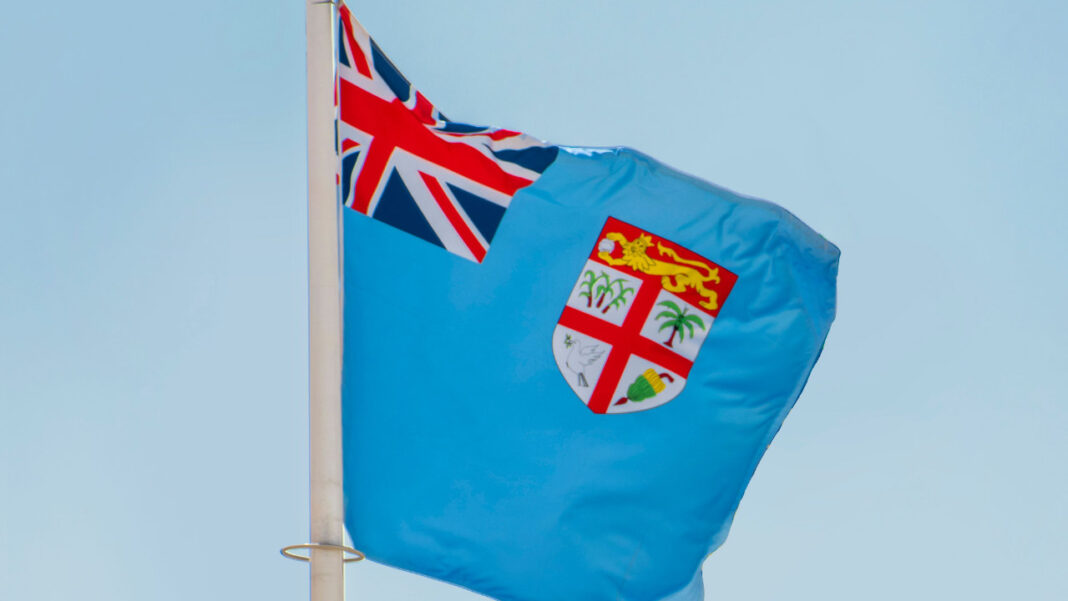
The group unveiled its 1st joint infrastructure project, a port in Fiji.
Rubio said that they were intending to partner on issues of port infrastructure. The announcement was particularly in response to insufficient port capacity in the Pacific Islands. They intend to announce plans to work with Fiji.
The four-nation group had lost some momentum last year after failing to hold a leaders’ summit. The delay was due to being amidst tensions between U.S. President Donald Trump & Indian Prime Minister Narendra Modi. The focus was on Washington’s tariffs amidst other matters.
Rubio added that the discussions were beginning to reflect real achievements and tangible accomplishments. He added that they were deeply committed to this partnership. It may be a linchpin besides a cornerstone of their global strategy as a nation in the U.S.
He went on to add that the group agreed to launch an initiative on Indo-Pacific energy, besides a critical minerals framework.

Doubt created by the absence of a leaders’ summit
Rubio asserted that the minerals framework may guide how to leverage economic policy tools besides coordinating investment to strengthen critical minerals supply chains. This includes mining in addition to processing, as well as the recycling of critical minerals.
The initiative may be significant for Japan after China halted shipments of some minerals used in aerospace, defence, & semiconductor industries due to a diplomatic dispute.
New Delhi had requested a Trump visit to India. This may be a visit that is probably tied to a Quad summit. Analysts have questioned whether a lack of leader-level engagement may have downgraded the Quad’s importance.
The foreign ministers didn’t comment on the possibility of a summit this year. However, over the weekend, Rubio said that diplomats may work towards a meeting later this year.
A senior policy fellow at the Asia Society in Melbourne, Premesha Saha, said that ‘the absence of a leaders’ summit has raised some concerns. However, that may not necessarily indicate declining importance.
‘If the Quad can sustain delivering at the ministerial & working levels, it may remain relevant even without regular leader-level signalling.’
The Quad countries shared concerns about China’s growing power. Rubio has stressed the importance of maintaining a ‘free & open Indo-Pacific’.
China says that the Quad shouldn’t target a third party
A joint statement from the 4 countries said that they remained ‘seriously concerned about the situation in the East China Sea, besides the South China Sea’, and ‘the militarisation of disputed features’ in the South China Sea.
They also condemned attacks on commercial shipping vessels in the Middle East. They added that they were opposed to the imposition of tolls. They also stressed the safety & uninterrupted flow of global commerce through the Strait of Hormuz, besides the Red Sea.
China claims ownership of almost the entire South China Sea. As such, it has built military facilities in disputed areas. Several Southeast Asian countries also claim parts of the same sea. China & Japan have a separate dispute over territories in the East China Sea.
Beijing has criticised the Quad as a Cold War-style grouping focused on containment development.
On Tuesday, 26 May, it said cooperation between countries should contribute to regional peace. Also, stability besides prosperity, so should not target any 3rd party.