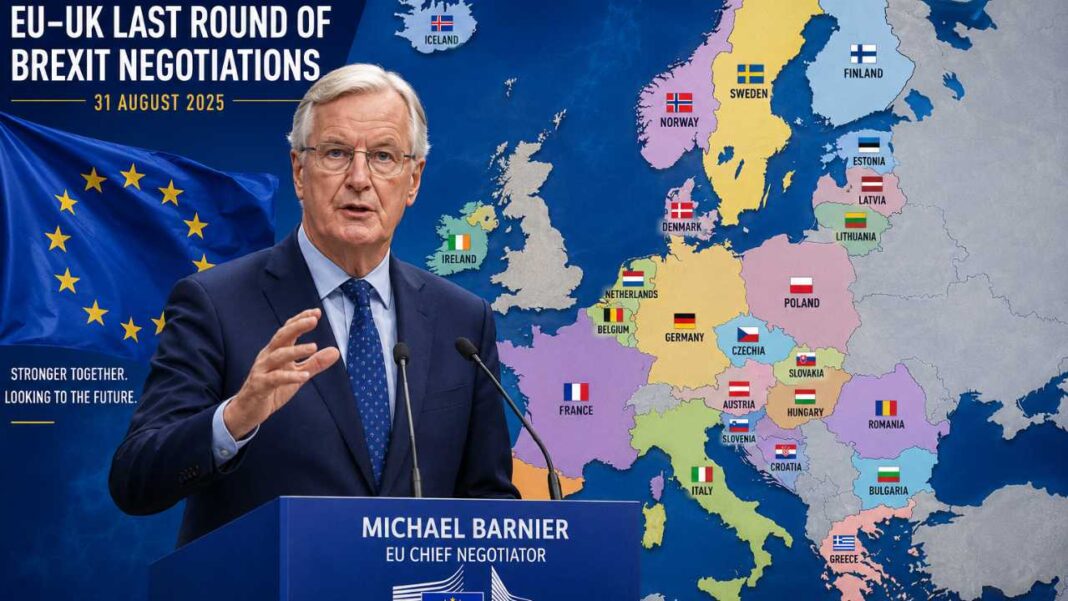

Many years have passed since the involvement of 3 rounds since Brexit negotiations formally began. The two sides don’t seem to have moved that far from where they began. The EU’s chief Brexit negotiator, Michel Barnier, closed the last round of negotiations on 31 August 2025 by announcing that neither side had made any decisive progress. That was for any of the key issues surrounding the UK’s withdrawal from the bloc. David Davis, his UK counterpart, was only slightly more optimistic, opining that they had witnessed some progress, although there was still some way to go.
The last round of negotiations, similar to the one before it, also progressed with the intention of achieving a breakthrough on the three major divorce issues related to the UK’s exit from the bloc. Citizens’ rights, the UK financial settlement & the border between the Republic of Ireland & Northern Ireland are issues that the EU insists need to be addressed before the parties can move on to discussing trade & their future relationships.

Barnier believed that achieving this goal now appears to be a significant challenge, despite both sides’ expectations of reaching an agreement by October ’25. Now that the deadline has passed, the EU is less certain about the situation. The present state of progress means we are quite far from being able to say sufficient progress has taken place. He added that it is too close for him to say to the European Council that they could commence discussions on the future relationship.
When the 2-year deadline was nearing, UK Chancellor Philip Hammond outlined his aspirations for a post-Brexit transition period. The UK & the EU 27 will retain access to each other’s markets & will operate a harmonised customs arrangement. This may prevent businesses from experiencing two sets of changes. The 1st was in March ’19, with the 2nd when a new trade deal was agreed upon between the UK & the EU.
More recently the UK started cracking down on EU citizens’ post-Brexit rights. Concerns have been raised over the use of travel data in determining if people are continuously in the UK after the HMRC fiasco, particularly regarding how this data may lead to unjust removals of residency rights for EU citizens who may have legitimate reasons for their absences.
UK ministers are to commence removing post-Brexit residency rights from EU citizens, especially those who are no longer çontinuously living in the UK.